

How to Check If a Power Strip Is Compliant (3-Step Check)
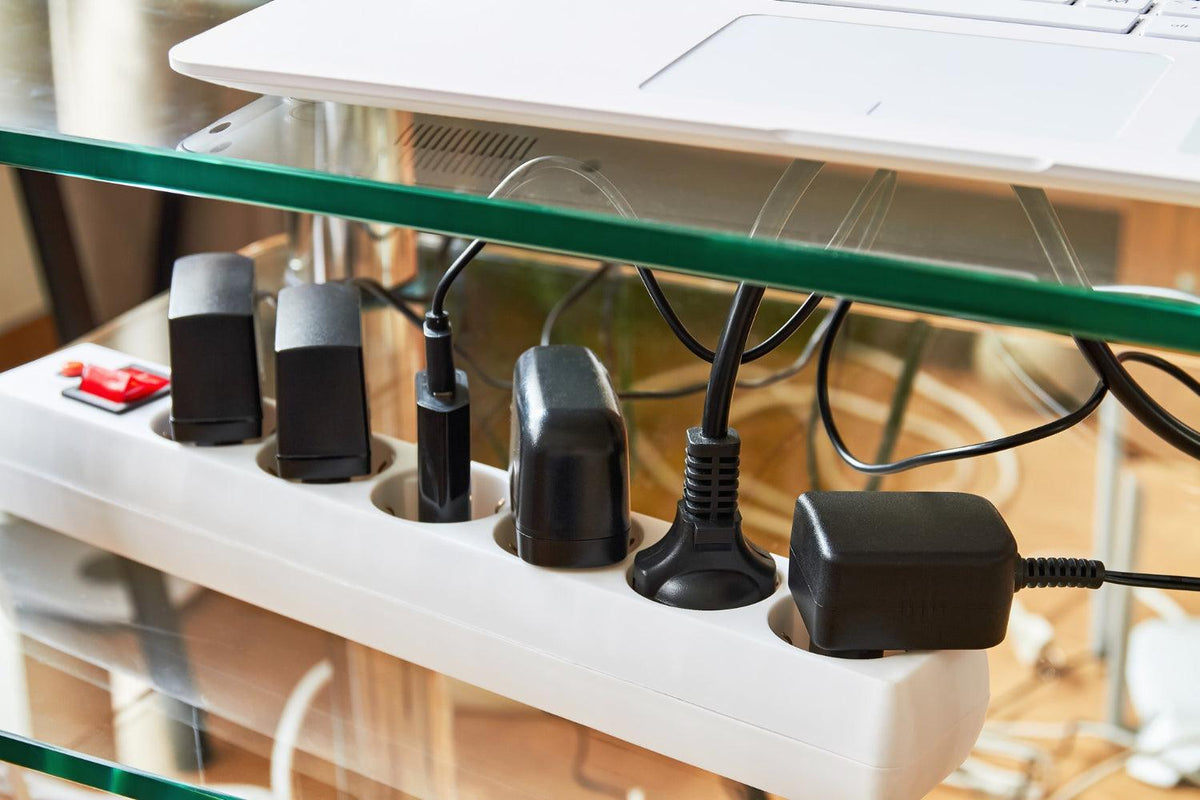
You can verify a power strip in about two minutes, without taking anyone's word for it. Three steps: find the listing mark and file number on the unit itself, look that number up in the testing lab's public directory, and confirm the standard it was tested to matches the product you are holding.
Almost every fake or uncertified strip fails at step one or step two. The mark is printed but the number is missing, or the number is there but resolves to a different product — or to nothing at all.
Step 1 — Find the mark on the unit, not the box
Look at the strip itself: the underside, the back of the housing, or molded into the plug. You are looking for two things together:
- A lab's listing mark — "UL Listed," "ETL Listed" (Intertek), or an SGS mark. A generic shield, a checkmark graphic, or the word "certified" on its own is not a listing mark.
- A file, control, or certificate number next to it — the identifier that makes the claim checkable.
Packaging is not evidence. Boxes are printed by whoever ordered them. The mark belongs on the product, because that is what the lab actually inspected.
If the mark is on the box but not on the unit, stop there. That is the single most common tell.
Step 2 — Look the number up in the lab's directory
Each major lab publishes a free public directory. Enter the number and see what comes back.
- UL — Product iQ
- Intertek (ETL) — ETL Listed Mark directory
- SGS — certificates are verified through SGS directly; ask the seller for the certificate and confirm it with the issuing office.
Three outcomes, and only one of them is good:
- It resolves to this product, this manufacturer, this standard. That is a real listing.
- It resolves to a different product or a different company. The number was borrowed. This is common with rebadged imports.
- Nothing comes back. The number is decorative.
Step 3 — Confirm the standard matches the product
A listing is only meaningful against the right standard. This is where most people stop too early: they see "UL" and assume it covers everything the product claims to do.
| What you are holding | Should be listed to |
|---|---|
| Power strip / outlet strip | UL 1363 |
| Power strip with surge protection | UL 1363 and UL 1449 |
| Retractable cord reel | UL 355 |
| Power unit built into furniture | UL 962A |
| Plug or receptacle as a component | UL 498 |
A strip advertised as a surge protector but listed only to UL 1363 has been tested as a power tap, not as a surge protective device. The surge claim is untested.
Watch the wording on cords, too. "UL Listed cord" means the cable is listed. It says nothing about the strip it is attached to.
Five red flags
- A mark with no number. Nothing to look up means nothing to verify.
- "CE" on a product sold for the US. CE is a European self-declaration. It carries no weight in North America and is not an NRTL listing.
- A joule rating with no lab named. Joules are a capacity figure printed by the factory. Without a UL 1449 listing behind it, no independent lab verified the number.
- A 20-amp receptacle on a 15-amp cord. The T-shaped NEMA 5-20R slot promises 20A. If the cord is 14AWG and the plug is a standard 5-15P, the product cannot deliver it. See how to spot a fake 20-amp power strip.
- "Certificate available on request" and then nothing arrives. A real listing takes a seller about a minute to produce.
What "compliant" does not mean
Three things get mistaken for certification:
- A CB report. That is an IECEE test report used to move data between countries. It is not a US listing.
- "Manufactured in an ISO 9001 facility." That describes quality management at the factory. It is not a product safety test.
- "Tested to UL standards." Read that phrasing carefully. Anyone can test to a standard in their own lab. Listed by an NRTL means an accredited third party did it and stands behind it with ongoing factory surveillance.
The wording is doing real work in that last one, and it is chosen deliberately by sellers who cannot say "Listed."
What this looks like on a CRST product
Every certified CRST model names its testing lab — ETL (Intertek) or SGS — and the standards it was tested to, on the product page itself, so you can match it against the table above before you buy. Certificates and compliance documentation are issued on request. For the underlying system, see how NRTL certification works; for what is legally required versus effectively required, see what approvals are required for power strips in the US.
Frequently asked questions
Where is the file number usually printed?
On the underside of the housing or molded into the plug body, next to the lab's mark. On smaller units it may be on a label wrapped around the cord near the plug. It is rarely on the retail box alone — and if it only appears there, treat that as a warning.
The listing resolves to a different company name. Is that a problem?
Not necessarily. Listings are held by the manufacturer, which may differ from the brand on the label. What matters is that the product description and standard match what you are holding. If the listed product is a different type or rating, the number does not belong to your unit.
Does CE mean anything in the United States?
No. CE is a manufacturer's self-declaration of conformity with EU directives. There is no third-party testing requirement behind it for most product categories, and it has no standing with OSHA, the NEC, or US retailers.
Is an uncertified power strip illegal to own or use?
Owning one is not illegal. Using one in a workplace is a different matter — OSHA requires electrical equipment used at work to be approved or listed by an NRTL, and adopted fire codes generally require relocatable power taps to be listed.
How do I check a surge protector's actual protection level?
Look for the UL 1449 listing first, then the Voltage Protection Rating (VPR). VPR is measured under the standard and reported in volts — lower is better. Joules describe capacity, not clamping performance, which is why two strips with the same joule number can protect very differently.
Power gear that matches the advice.
Certified by an OSHA-recognized NRTL — ETL/SGS · UL1363 & UL1449. Full-gauge copper — 14AWG on 15A models, 12AWG on 20A. 18-month warranty, free extension to 36 months on registration.
0 Comments